

Escape Pod 1058: Riftwork (Part 2 of 2)
Riftwork (Part 2 of 2)
By C. W. Maurer
(…Continued from Part 1)
I glance back at Risa to find her backing away from the damaged support, wiping her fingers on her worksuit. She looks at me, blinking. “What do you mean, ‘water’?”
“The tunnel’s flooded. Flooding.” It must slope down from the turn, because the next 50 feet or so are submerged. “It’s not deep, but if it’s spread that far since Zef went through yesterday…”
She shudders and takes a few more steps away from the wooden support, wiping her hand again. “There must be another leak here. A small one. The wood is rotten through. That couldn’t have happened since yesterday.”
I stand at the corner, staring at the pool of water in front of me and the flat layer of gray-white sediment covering the bottom of it.
For that much sediment to have washed in overnight…
“That’s not good,” I mutter, my mouth dry. I look up at the tunnel ceiling, searching for weak points. Shifted stones. Dripping water.
“Is the leak on the left-side wall there, too?” Risa asks.
“Can’t tell. It must already be submerged.”
“Pull the line so I can get the mark down.”
I’m tempted to tell her there are more important things at hand, but take a breath and nod, pulling the measuring line taut.
That’s the reason we do the surveys, isn’t it? To find what points are at greatest risk of collapse? Because our sense of what looks right doesn’t always match the numbers.
It’s easy to default to what our senses tell us, but senses can be tricked.
Right now, all my senses tell me to head back the direction we came at full speed, but now that the tunnel has started to loop back toward the training node, we’re probably closer if we keep going forward. Not that the shorter path automatically gets priority. Avoiding a half hour of walking doesn’t mean much if we’re caught in a collapse.
This much new water means something shifted overnight. Which means it might shift more today.
“Is greater collapse risk ahead or behind?” I ask. I have a rough sense of where we are on the map, but Risa’s the one who’s been staring at it all day.
She checks the line and notes the measurement before joining me at the turn. As she stops short, she mutters some word I don’t recognize under her breath. Some surfie curse?
I laugh, because it’s easier to focus on the strangeness than on fear.
She ignores me and crouches down to balance her notebook on her knees. “Distance to the far end of the pool?”
I nod and tug the stake free, reeling the line in quickly and pressing it into the dirt at the center of the turn. When it resists, I add more pressure with my boot instead of getting out my hammer as I would have half an hour ago.
It holds, and I look at the pool of water ahead of me.
We’re taught not to cross untested standing water unless absolutely necessary. It’s hard to say what the chemical makeup of it might be, or what sediment might get stirred up if it’s disturbed. But that’s to prevent a reaction between chemicals in the sediment and any gases in the air. If the sediment has been pouring in with the water since yesterday, then we are already well down that path.
So I tighten my worksuit around my boots, hoping the waterproof seal between the two holds, and pace out through the water, unwinding the measuring line as I go. It hits just below my knee at the deepest point. I breathe a sigh of relief when I reach the far side of the pool. “Sixty feet,” I call back to Risa before hurrying on. “Support at ninety. This one seems sturdy.”
She nods and begins scribbling away.
I keep going to the turn, hope fighting with dread.
What do we do if there’s no clear indication of which direction is more dangerous?
I reach the turn and adjust my headlamp to get a clear view the whole way down to the next turn. My breath catches. Even as I estimate the distances to the mess ahead, my hands follow the same routine they’ve been doing all day. Pull the line taut. Read the number.
“Turn is at one-eighty.” I swallow to wet my dry mouth. “Moisture on left-side wall fifty feet out from here. Small puddle at base. Supports at eighty. Debris pile on left side has kicked that support out across the path. Right-side support condition unknown.” I back away from the corner, unable to pull my eyes away. Like if I just stand there and watch it, it won’t move.
Another breath, and I turn to where Risa waits, moving as quickly as I can without adding any additional vibration of boots on stone.
Her notebook sits on the ground beside her as she digs through her toolbelt.
“Did you get that?”
She nods as she looks up, reaching one hand for her pencil as the other goes to her head. Earplugs. She puts the left one in and holds onto the other as she writes something down on the map sketch.
“Do you really think that—?” I shake my head. Doesn’t matter.
“What about the turn at the end?” She looks away. “I don’t do well with noise. I’d almost rather get squashed than deal with—”
“It’s fine.” I’m at the water again, which is cloudy from my previous crossing. “It turns right at the end. The section’s about one-hundred and eighty feet between turns.”
She puts in the second earplug and turns her full attention to sketching out the map, and I finish winding up the rope and stand behind her, trying to make sense of what she’s drawn. As soon as she finishes marking the risk points on that treacherous far section of tunnel—what I’ve been calling the anti-hubward tunnel in my head—she reaches for the transparent city layer for reference, then pauses and curses again.
Of course. All the load distributions we’ve calculated are based on an imaginary city overhead. Which means they’re all useless.
I grab the transparent layer from her and shove it into my own pack, then point back to the empty space enclosed within the loop of the map she’s just sketched. “What’s here?” I raise my voice, not sure how much the earplugs block. “Up on the surface.” We at least know the tunnels and existing supports are accurate. We just need to recalculate with the correct information.
She laughs bitterly. “I don’t have the entire geography of the surface memorized,” she says, loud enough to make me wish I’d also put in earplugs. “That’s more than two miles from city boundaries.”
I sit down cross-legged and tear a sheet of paper out of her notebook, setting it on top of the map. I hold a hand out for her pencil, pulling off my glove to make a sketch of what we knew about the land overhead. “How far are the mountains from the city?”
She shakes her head. “It’s not like you cross a line and they jut straight up in the air. It’s gradual. There are hills and valleys and rivers and… and lakes.” She looks at the pool an arm’s length away from us.
“I know that. I’m just—”
“Wait. Look.” She points at where the water hits the walls of the tunnel. Where ripples are forming.
Vibrations in the walls.
I curse and get to my feet, my heart racing. But what’s the use in running when we have no idea where to go?
It’s not a collapse. Not yet.
There’s a faint but distinct thump from the hubward tunnel, and I freeze and stare back that way.
A displaced stone? A broken support?
My pulse pounds in my ears. Or is that a rain of debris echoing through the tunnels? It gets louder, the vibration growing more intense as an ominous rumbling joins the noise.
Risa has ducked into a ball, hands over her head. I grab her and drag her backward, into the corner, where I can have my back to two walls.
It’s hard to tell the difference between what I’m hearing and what is vibrating through my body, resonating within my chest in a terrible, pounding ache. I stick my fingers in my ears for good measure, but it does little good as the noise escalates into a roar that ignores my attempts to block it out. It rattles my head, and my chest feels like it might burst. My lungs ache too much to breathe. Distinct cracks break through the roar of noise, and I can feel moisture on my face as a scream breaks free of my throat.
Water? Tears? Blood?
Is this what thunder feels like?
I don’t know how long it takes for the roar to stop.
The rumbling eventually gives way to Risa’s eerie keening. She leans crouched over on the ground, her arms still hugged over her head, a layer of dirt coating her worksuit. She breathes in jerking sobs that terrify me as much as the noise had.
“It’s all right, Risa,” I say, my chest aching. I cough to clear my lungs of the dust in the air. “It’s over.” For now. And we need to figure out what’s going on before anything else comes down. I wipe my face, feeling like I’ve been crying. Or like all the snot has been rattled out of me.
Risa doesn’t seem to hear me over her own hoarse voice, so I reach out to touch her shoulder.
She lurches away, almost ending up in the water before I can grab her and hold her tight in a firm, awkward embrace.
I pull her away from the water, even as she fights to get free. Eventually, her struggling slows, her body trembling all over as she sits and sobs in the now-quiet tunnel.
I don’t trust the quiet.
I dig through my pack for my med kit and unfold the blanket inside, throwing it over her shoulders. She pulls it over her head as well and braces her forehead against the wall of the tunnel. I don’t stop her as she sits there trembling. Rocking a little.
I’ll figure out something else if she’s still ignoring me in a few minutes.
In the meantime, I try to calm myself down. I sip some water from my bottle, but not much. Until we can confirm there’s a way out, we need to keep our clean water carefully rationed.
I check in with her every few minutes as I calm myself down and try to understand what happened. There’s a glimmer of dust spreading toward us from the turn in the hubward tunnel. The little trickle of a stream is flowing faster, but the pool next to us doesn’t seem to be any deeper. I suspect it’s the leak behind the rotten support.
Fifteen minutes pass before Risa gives any sign of hearing her name. Even then, it’s only a brief stillness followed by slightly steadier breathing.
I tell myself this is still some part of the practical. That the instructors will evaluate our methods when we get back. It’s far easier to keep focused that way.
“Water?” I ask Risa, raising my voice to make sure she can hear me. “We should get back to work.”
She pokes her head out of the blanket and looks at me, her headlamp blinding until she remembers to turn it up toward the ceiling. She’s pale, her eyes red. “What?” she asks, her voice barely audible. She’s still shaky, rocking a little.
“Water?” I gesture toward my ears, and she removes her earplugs a little cautiously, staring hubward. Holding out the water bottle toward her, I turn to look down the tunnel as well, pointing my headlamp straight to reveal the dust glimmer. “Part of the hubward tunnel collapsed.”
She takes the water bottle and gulps some down.
I have to stop myself from snatching it back and warning her not to drink too much.
“2,671.” she says. “It wasn’t one the instructors planned.”
I nod, trying not to think of how many times I climbed back and forth over the partial collapse, assuming it was secure. I turn to look at her.
“You should update the survey.” I wave a hand toward where the notebook still sits on the ground, now covered in a layer of dirt.
She nods, seeming relieved to have a task. “You’re right.”
It’s a test. A problem to be solved. We can solve problems. Just need to keep the units straight.
As Risa paces back and forth, pouring her focus into updating the map, I sit cross-legged and stare at the anti-hubward turn. I’m pretty sure I hear splashing from that direction. A widening of whatever leak was there in the wall. It won’t be long before the faulty support on that side gives out. It couldn’t have yet, or the faint splashing would be a torrent.
I take a deep breath and close my eyes, trying to get my thoughts in order.
If both sides go down, we’ll be safest at the farthest point we can get from either collapse. Which means we should stay right where we are, tucked into the corner.
Is there any way to shore up the space? To make sure that at least it is stable?
It’s a test.
Solve the problem.
Before I can figure out where to begin, I hear a faint beep against my neck and freeze.
A poor air quality alert. I count seconds between beeps and resist the urge to hold my breath.
Once I’ve counted eighteen seconds twice, I swallow and get to my feet before addressing Risa. “How long has it been since the collapse?”
It must have taken out the air filtration for this section of the tunnel.
Her wince reminds me how long it took her to recover from the noise. And how unaware she was of what was going on around her.
“I think it’s been close to twenty minutes,” I say. It’s likely been closer to thirty, but a low estimate is safer if we’re trying to get a sense of how quickly the air quality is worsening. The sensor doesn’t beep when I’m standing. The gas is heavier than air, then. Pooling in just like the water.
“Does it matter, if they’ll be sending masters after us?” Risa asks, hopeful. “We can try to find a way to shore up the corner into a node of sorts, but as long as we are careful with food and water, we should be fine.”
“That was my thought too,” I say, removing the air sensor from my collar. “But there’s bad air coming in with the water.”
She braces as if someone hit her, then nods and swallows. “We’re not that far from the training node,” she says, clearly looking for me to agree. “We’ve seen the tunnels they have to cross. They’re clear before the collapse.
Compared to the periphery, they’re huge.”
I don’t voice the questions that come to my mind as I head back toward the pool, sensor in hand, to try to get a sense of how much toxic air has built up. Wading out into the water, I clip the sensor to my worksuit just above knee height and slowly make my way across the pool, looking for where the concentration might be higher. At the spot where the water is deepest, the beeps are as close as fifteen seconds apart. But that gap will get smaller the longer we wait.
Ten seconds between beeps will need medical attention within the day. If it gets down to five, it’s considered lethal within the hour.
“We’ll need to stay on our feet,” I say. “Ground level won’t be safe much longer.”
How long would it take the instructors to find someone with training to navigate the tunnels safely? How long would it take those people to get back to the tunnels with equipment?
On the periphery, there’s an unwritten guideline that you wait twelve hours after a collapse for additional settling before doing any demolition. Otherwise, you could lose more people trying to get to the ones who are trapped.
Would they ignore that now and risk the lives of trained rifters to save two apprentices? One of them a surfie?
Risa interrupts my answerless questions. “This is what your masters train for, isn’t it?”
I turn and look at her. I’m not a cynical person, but I am a math person. And the math here doesn’t work out in our favor.
There are few unassigned masters near the node. Even if Parin sent for someone immediately, it could take an hour or more to get someone there and equipped.
That person would have to navigate the same tunnels we had, but even more carefully. Each of those manufactured weak points are going to look like real threats now. And some of them probably will be.
I swallow. “What do you say if you don’t agree?” I ask Risa, still counting seconds between beeps in my head. “Up on the surface.”
“That we look north and south.” She pauses, then continues more quietly, “Or east and west if you know the other person is wrong.”
I nod and look down at the water again. If the gases are coming in through the same crack that the water is, would it be possible to stop it?
But we don’t have materials to cover a leak, even if we could find it.
Thirteen seconds between beeps. I move the sensor up six inches on my worksuit, and it drops back to fifteen seconds.
I continue to work my way around the pool, trying to narrow in on the source of the toxic gas to a smaller area. At this rate, the air will kill us long before another tunnel collapse has the chance.
I notice a large chunk of pale rock under the water and search the tunnel walls to find where it came from.
My headlamp reveals a dark section in the pale stone of the right-side wall, and I look closer and find some odd, dull metal sheeting exposed where the stone fell away. But it’s not stone. At least not the stone that supports the rest of the tunnel. It’s light and porous. Something that’s solidified here since the cryochron?
I pry at the edges of the material with my gloved hand, then turn to Risa. “Take the stake off the measuring line and bring it here. There’s something pre-cryo here. And you’re good at their symbols.”
“No one’s good at their symbols,” she says, but follows the instructions, grabbing the right-hand glove from where I left it and tugging it on as she wades into the pool. She pries at the odd coating, and I continue halfway down the tunnel to make sure the gas isn’t coming in from that direction, but the sensor quickly drops to nothing.
By the time I get back to the water, there are twelve seconds between beeps and I have to move the sensor to my toolbelt. At this rate, we have…about twenty minutes until that fifteen seconds is at throat level. And the concentration will get worse if we have to pick anything up off the ground.
I make sure everything is in our packs and hand Risa hers.
By now, she has cleared enough material to reveal more characters.Below them, the much more helpful symbols of arrows, very clearly point down each tunnel.
“So are those north and south, or east and west?” I ask, tension eroding tact.
She ignores me. “It’s a sign. Why put a sign out here unless this is where someone is entering the system?” She turns to face the opposite wall, and I do the same. The interior of our tunnel loop.
We both stand there and stare at it.
“The water has to be coming from there,” Risa says, a little helplessly.
“There can’t be any lakes or rivers on the surface, or the instructors never would have thought it safe to be in here.”
“But it’s spring,” she points out. “Flood season up in the mountains. If there’s some empty space in there that was blocked until now, and it’s been filling with water, where else would that go?”
“Something connected to the surface? An entry node for the tunnels?” I’m whispering. As if there’s a chance of someone overhearing the crazy idea and criticizing it.
But then, isn’t crazy what we’re good at?
I look at the pool we’re standing in. Consider the splashing I can still hear coming from the anti-hubward tunnel. “How much water can it be holding?”
Risa reaches for her notebook. Hands me a piece of paper and a pencil. We confirm the details we know. How far below the ground we are. The square footage inside that loop that we’ve painstakingly surveyed all day. How much water has pooled here since the day before. I go to check how quickly the anti-hubward pool is forming and find not a pool, but a stream running steadily away from us. Too much longer, and it’s likely to wash out the tunnel support that still stands in that section.
I shudder and report back to Risa, who adds it to her sketches.
We do the math.
She’s more generous than I am in her guesses about the unknown parameters. Assumes a sphere and an overall height not much higher than a person can stand in. “If it’s just an entry node, why would it need to be larger?”
We swap starting parameter notes and do the calculations again, ending up with the same numbers. It at least gives a reasonable range. But where will all that water go? If it pours into the tunnel where we’re standing, it will wash us away long before we can escape.
It won’t go anywhere until we figure out how to open the pre-cryo door Risa has been freeing of its weird porous coating.
The air sensor is at my bicep, giving us twelve seconds between beeps. We have about ten minutes before we need to do something. Fifteen if we think we’ll find a way to get medical care in reasonable time…so ten.
“We need to make the anti-hubward stream bigger,” I tell Risa. “A lot bigger. That’s the only way it’s going to drain fast enough. Some of it might overflow this way, but most of it will wash anti-hubward.”
“And wash out the training node?” Risa says, looking past me, toward the turn.
“The drainage in the central system should be able to manage it.” I hope. “It will probably destroy the tunnels. But the supports in that section are going to get washed out by the time it finishes draining anyway. I’d rather have it happen now, while we’re still breathing than tomorrow when any number of other things will have already killed us.”
“We’re in the same node, then,” Risa says. She rolls her eyes at my grin. “We still need to open the door.” She gestures helplessly at it. It’s been almost entirely cleared, but there are no visible hinges or latches or locks.
We both stand back to stare at it, until Risa mutters that surfie curse again and runs a gloved hand around the exposed edge, which sits flush against stone. Not stone. The same odd metal the sign is made of.
“The water’s holding it in place,” she says.
“Right.” I reach out a hand to take the metal stake from her and grab the hammer from my toolbelt, then head to the corner.
I study the tunnel wall around where the water is now readily spouting out onto the floor, turning the packed dirt into a muddy stream. It takes all of two seconds to realize that my plan of finding weak points between stones to drive the stake into will take too long. That might be the proper approach for a controlled demolition, but it’s not what’s called for today.
Instead, I pick the stone directly under the gap in the rocks and make a wild two-handed swing with the hammer to knock it loose. My teeth slam together painfully as the hammer bounces back, and I nearly lose my grip on it in the spray. There’s a chip missing from the stone, but it didn’t budge.
I aim for another. The one just next to it. I keep a better hold on the hammer this time, but the stone shifts into the path of the water, plugging the gap and cutting down the flow of water.
I curse under my breath and continue on to each of the neighboring stones, getting increasingly desperate until I can hear Risa calling to me from the corner.
“12 seconds at neck level,” she says. She’s yelling. She must have her earplugs back in.
I back up a few steps to catch my breath, wiping sweat from my face. Here at the corner, the air is still fine, but when we go to the door again, we’ll need to be sure it will open.
I count out ten breaths, then go back to the wall, where water is now lazily leaking down over the stone.
The other collapse was set off by almost nothing. Yet something that would get me kicked out of training altogether in another situation doesn’t even budge the stones.
I eye that first stone. The one with the chip on the side from my previous strike. It seemed like the best one then, and still does.
I wind up for one more swing, slamming the hammer down. The stone shifts, and I let out a whoop of excitement and line up for another hit. Before I can swing, though, water shoots out from the cracks in the wall, and I throw myself back away from it just in time for the entire section of stone to tumble into the tunnel.
More water than I have ever seen pours in, roaring into the tunnel. I scramble backward before turning to sprint to the corner with a burst of manic laughter.
Risa and I track the water flow from the corner, me collapsed on the ground catching my breath.
I realize eventually that the sensor on my bicep is gone. Likely knocked loose while I was trying to break down the tunnel wall.
By the time the flow has slowed enough for us to hope the water piled up behind the doors has found its way out, the initial giddiness has faded into dread of what comes next.
In the meantime, the entire stream has backed up enough to confirm that the tunnel is blocked entirely somewhere in that direction.
We start toward the doors, Risa measuring the air toxicity as we go. Her sensor hits ten seconds at neck level, a good fifty feet away from the doors.
We pause there for a long moment.
“Ready?” I ask, letting out my breath in a rush.
Risa nods, then takes a deep breath and runs toward the doors.
I follow a moment later, and the two of us shove against the left-side door as the air sensor beeps madly on the collar of Risa’s worksuit. Whatever’s in the air makes my eyes sting, and I squeeze them shut. Our boots slide in the muddy pool, but the door budges incrementally as we both lean our full weight against the ancient metal.
When it slips open enough for the rush of water to wind through, I yank off my remaining glove and shove it into the gap before elbowing Risa and retreating to the anti-hubward corner. We stand there gasping for air, the air sensor beeping at regular fifteen second increments. But every second we wait means less water behind the doors.
“Ready,” Risa says when the beeping gets quicker again, her eyes red.
“Okay. Let’s go.”
I wait until she fills her lungs with air before doing the same, and we both take off toward the doors at the same time.
We’re fighting the ancient hinges instead of water this time but open it enough to slip through. There are stairs carved into the stone on the other side. I yank off my helmet and use it to prop open the door so that water and air will keep flowing out.
We climb the stairs as quickly as possible, eyes stinging enough in the toxic air that even Risa’s headlamp is barely helpful.
My heart races too quickly for me to count seconds, but the sensor beeping is close enough to my heartrate to be sure that it’s not safe yet, even when the stairs open onto the floor of some ancient node, almost half the size of the hub.
Risa slows, eyes scanning the room in clear awe, which means the light of her headlamp follows. I jab her with an elbow, and she moves more quickly, panning the light across the walls until it reveals a tunnel that seems to lead upward. We run in that direction, lungs and eyes burning.
Several steps up the tunnel, I allow myself one breath and hope it won’t be the one to kill me. Risa makes it a few more paces before doing the same, and we pause at the next landing to count seconds between beeps. Eight.
Close.
We sprint to the next landing, and by the time we pass halfway, I don’t hear another beep.
We collapse there for ten minutes or more, then practically crawl our way up through the remaining lengths of tunnel, eventually finding ourselves in another node of sorts, the ancient door on the far side opening into a natural cavern.
It’s twice as high as I am tall, with no surface shaped by human tools except where the door sits. I’ve never seen anything like it.
A wild tunnel.
Risa turns off her headlamp, and before I can ask what she’s doing, I see light through the rocks ahead.
It’s night, but the sky is free enough of clouds for the moon to show through.
The moon. I never knew it was so blue.
A weird, giddy bark of laughter escapes me, and I fill my lungs with surface air—fresh and full of more smells than I could ever identify.
Dazed and aching, we stumble through the narrow gap out onto a grassy hill, where I stop short, overwhelmed by the size of the world.
Risa takes a few steps forward, her attention on a wild array of lights in the distance.
Nerisan City.
She looks back at me, grinning, then looks up, and we stand there together, facing the stars.
Host Commentary
By Mur Lafferty
And that was “Riftwork” Part 2, by CW Maurer.
I had a dark thought the other day. We keep reading stories about how groups that are suspicous of one another because of ignorance will find they have more in common than they think. Often it’s through a mutual trial, like Riftwork, where it’s great to work for the same goal when that goal is survive. But in our world, we’re still suspicious of people from other places, or talk differently, or have lived a different experience.
I guess we need more stories urging people to not assume too much when you meet a new person.
In Riftwork, Nat and Risa aren’t even enemies or opponents. But Nat still doesn’t like being paired with her because Risa is a surfie who keeps to herself. And surfies think the rifties are crazy, remember. And even when your prejudice is you expect the other person to dislike you, that can lead you down some inefficient and sometimes unfortunate paths.
Nat even says it at the beginning, she assumes the surfies have incorrect assumptions about people like her because they’re on the surface with the constant light. “How else could they misunderstand so much?”
How indeed?
A little bit of housekeeping; there will be several Escape Artist folks at Worldcon this year, and owners Alasdair and Marguerite will be there, as will I! If you’re a fan of the show and you’ll be in LA, drop by and say hi!
Escape Pod is 100% audience supported, and we count on your donations to keep the lights on and the servers humming. Head to https://escapeartists.net/support-ea/ to see all the available donation and subscription options, including Patreon, PayPal, Ko-Fi, and Twitch. We are a 501 c-3 charity, so if you’re in the US, supporting us could be a tax write-off.
You can also support Escape Pod for free by rating or reviewing us on Spotify, Apple Podcasts, or your favorite app.
Escape Pod is distributed on a Creative Commons Attribution-NonCommercial-NoDerivatives license. Our music is by permission of Daikaiju. You can hear more from them at daikaiju.org.
That was our show for this week. Our quote comes from Frank Herbert: “Most deadly errors arise from obsolete assumptions.”
About the Author
C. W. Maurer
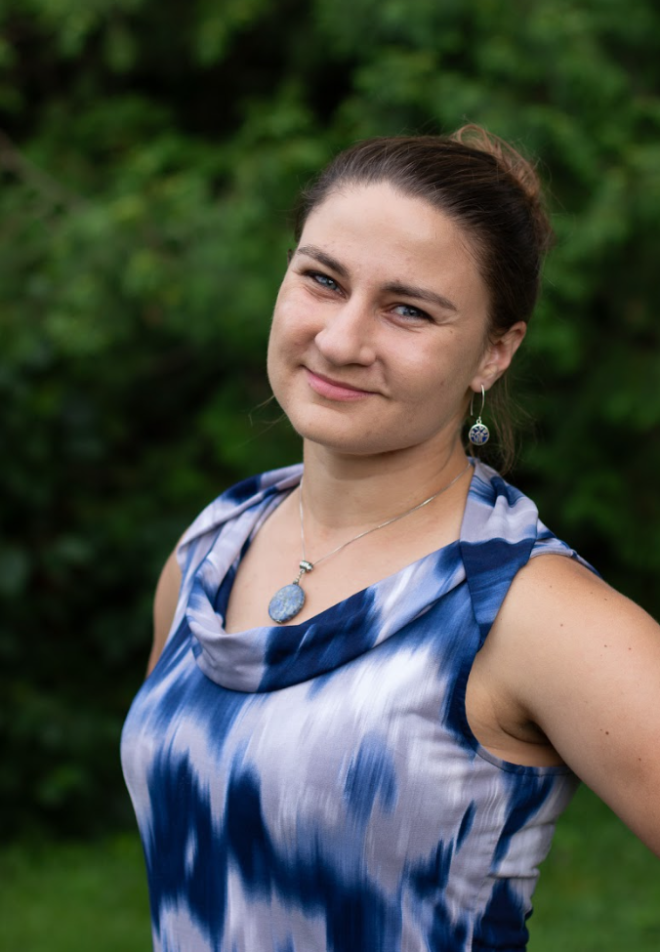
C.W. Maurer is a New England writer of epic fantasy, low-tech sci-fi, and video game soundtrack reviews. She lives in New Hampshire with her husband, son, and giant floof of a dog.
About the Narrator
Nicola Chapman
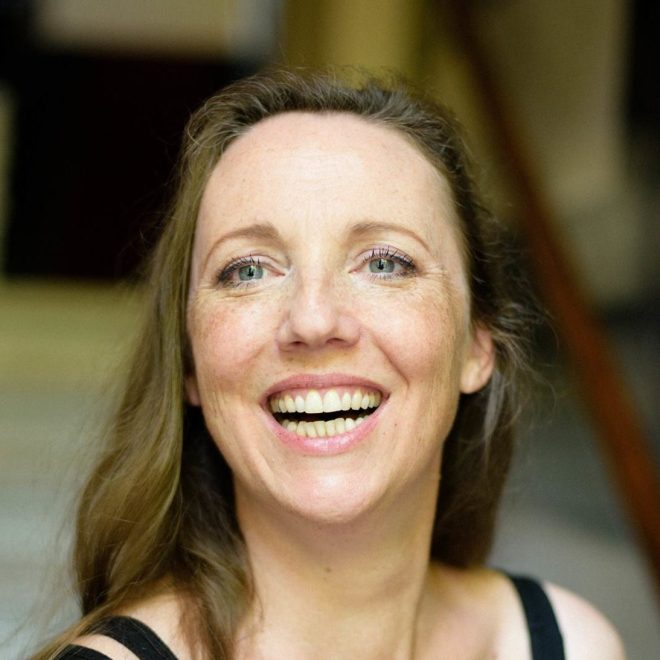
Nicola Chapman has worked professionally as an actress for over thirty years in TV, film, radio and internet. Her voice-over experience includes TV and radio advertising, singing jingles, film dubbing and synchronisation, training videos, corporate films, animation, video games and Interactive Voice Response for telephone menus. She spends most of her time running her voice-over business, Offstimme, which sources and provides translations, subtitles and voice-overs in over 40 languages. She has been known to write a story or two, purely for her own enjoyment, but she loves bringing other people’s stories to life in the studio.
When not working, reading or playing with her cats, Nicola can often be found up to her elbows in flour, trying to make the perfect brioche. This may take a while….
